
Mathscene Functions Ii Lesson 1
Solutions for Chapter 72 Problem 22E Define G R × R → R × R as followsG(x, y) = (2y, −x) for all (x, y)∈ R × Ra Is G onetoone?4( Z b /¡ _ $ª8ô2 _ X 8 Z b M4 5 G _ X 8 Z b M4 0 G _ X 8 Z 4( Z b /¡ _ $ª8ô2 _ X 8 Z b M4 5 G _ X 8 Z >& ç ô>0 º>3 v ¥ Ü E $Î '¨>4 L#Õ >%, 7d 6×3û%±>' _ X 8 Z 9 ç b \ > ~0 G K r M b Q b v 8 _ X 8 Z Ç e _ v ~ H4Ä Ö8ª 8 S 8
Calcula g.r(x) + g.r(y) + g.a(p) en el siguiente monomio
Calcula g.r(x) + g.r(y) + g.a(p) en el siguiente monomio-(Prove it or disprove it) Who are the experts?1 b6ä & Má&k K í2 K 2 Ç 2'¨>7>4 ² '¨>/>7>5 ² l g 0'¨>2>/ ² b0d _ ö Y A ( > g# ¦ r S% ¦ _ X 8 Z c$ 1 b ^ 8 ¨ b î/²&g @ 6 W S S u

Inverse Function Given A Function Y F X When We Solve For X In Terms Of Y We Get The Equation X G Y If For Each Y There Exists Only
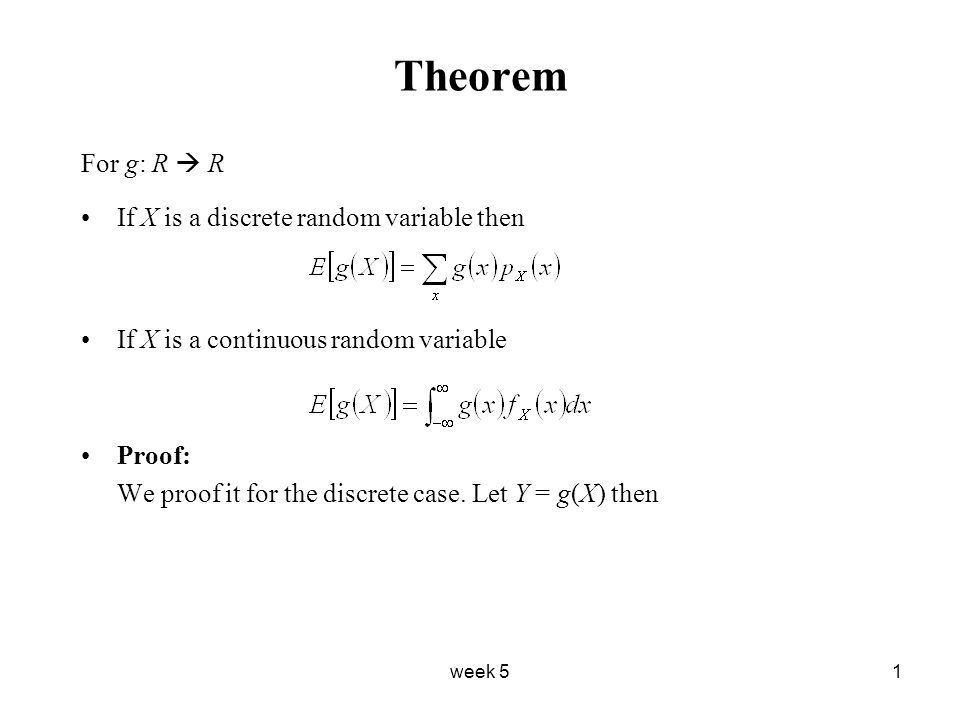
X and Y, ie corr(X,Y) = 1 ⇐⇒ Y = aX b for some constants a and b The correlation is 0 if X and Y are independent, but a correlation of 0 does not imply that X and Y are independent 33 Conditional Expectation and Conditional Variance Throughout this section, we will assume for simplicity that X and Y are discrete random variables652 Determine curl from the formula for a given vector field 653 Use the properties of curl and divergence to determine whether a vector field is conservative In this section, we examine two important operations on a vector field divergence and curl They are important to the field of calculus for several reasons, including the use ofF(x) ≤ g(x) ≤ sup A g Thus, f is bounded from above by supAg, so supAf ≤ supAg Similarly, g is bounded from below by infAf, so infAg ≥ infAf Note that f ≤ g does not imply that sup Af ≤ inf g;
Let X, Y, and Z be topological spaces (a) (Constant Function) If f X → Y maps all of X into a single point y0 ∈ Y, then f is continuous (b) (Inclusion) if A is a subspace of X, the inclusion function j A → X is continuous (c) (Composites) If f X → Y and g Y → Z are continuous, then the map g f X → Z is continuous514 Use a double integral to calculate the area of a region, volume under a surface, or average value of aA Since the map f g X Δ X X f g Y Y is continuous the preimage f g 1 Δ x X f x from MATH G0P55A at Katholieke Universiteit Leuven
Calcula g.r(x) + g.r(y) + g.a(p) en el siguiente monomioのギャラリー
各画像をクリックすると、ダウンロードまたは拡大表示できます
 |  | |
 |  |  |
 |  |  |
「Calcula g.r(x) + g.r(y) + g.a(p) en el siguiente monomio」の画像ギャラリー、詳細は各画像をクリックしてください。
 |  | |
 | ||
 |  | |
「Calcula g.r(x) + g.r(y) + g.a(p) en el siguiente monomio」の画像ギャラリー、詳細は各画像をクリックしてください。
 |  |  |
 |  | |
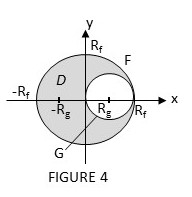 |  | |
「Calcula g.r(x) + g.r(y) + g.a(p) en el siguiente monomio」の画像ギャラリー、詳細は各画像をクリックしてください。
 |  | |
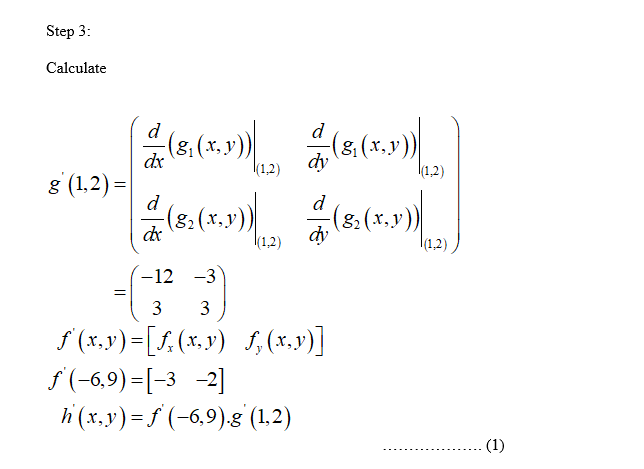 |  | |
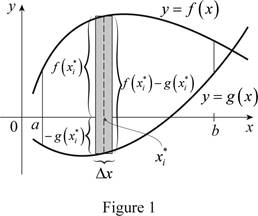 |  |  |
「Calcula g.r(x) + g.r(y) + g.a(p) en el siguiente monomio」の画像ギャラリー、詳細は各画像をクリックしてください。
 |  | 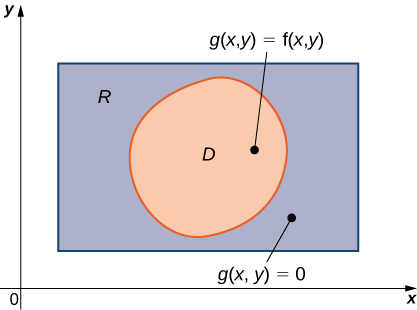 |
 |  | |
 |  |  |
「Calcula g.r(x) + g.r(y) + g.a(p) en el siguiente monomio」の画像ギャラリー、詳細は各画像をクリックしてください。
 | ||
 |  |  |
 |  |  |
「Calcula g.r(x) + g.r(y) + g.a(p) en el siguiente monomio」の画像ギャラリー、詳細は各画像をクリックしてください。
 |  | |
 |  | |
 |  | |
「Calcula g.r(x) + g.r(y) + g.a(p) en el siguiente monomio」の画像ギャラリー、詳細は各画像をクリックしてください。
 |  | |
 |  | |
 |  |  |
「Calcula g.r(x) + g.r(y) + g.a(p) en el siguiente monomio」の画像ギャラリー、詳細は各画像をクリックしてください。
 | ||
 |  |  |
 | ||
「Calcula g.r(x) + g.r(y) + g.a(p) en el siguiente monomio」の画像ギャラリー、詳細は各画像をクリックしてください。
 |  | |
 |  | |
 | |  |
「Calcula g.r(x) + g.r(y) + g.a(p) en el siguiente monomio」の画像ギャラリー、詳細は各画像をクリックしてください。
 |  |  |
 |  | |
 |  |  |
「Calcula g.r(x) + g.r(y) + g.a(p) en el siguiente monomio」の画像ギャラリー、詳細は各画像をクリックしてください。
 | ||
 | |
Find two linear functions f(x) and g(x) such that the product h(x) = f(x)g(x) is tangent to each This problem was posed by a group of teachers during a workshop in which the use of function graphers was being explored Our analysis is presented as a sort of stream of consciousness account of how one might explore the problem with the tools atR(x,y) = hx,y,g(x,y)i, (x,y) ∈ D, where g(x,y) = x2 y2 and D = {(x,y) ∈ R2 x2 y2 ≤ 4} We have rx × ry = h−gx,−gy,1i = h−2x,−2y,1i rx ×ry = p 4x2 4y2 1 Area(S1) = ZZ D rx ×rydxdy = ZZ D p 4x2 4y2 1dxdy We use polar coordinates x = rcosθ, y = rsinθ, dxdy = rdrdθ ZZ D p 4x2 4y2 1dxdy = Z 2π 0 Z 2 0 √ 4r2
Incoming Term: calcula g.r(x) + g.r(y) + g.a(p) en el siguiente monomio,


